You've probably got a box of "sleepy time" tea in the cupboard that you bought because the box promised calm, and you've probably never once asked what's actually in it or whether it does anything. Fair enough. Most of us treat herbal tea as a warm, vaguely healthy ritual rather than a supplement with real physiological effects. But here's the thing: some of these plants genuinely do something measurable, and a few of them can actively interfere with medication you're already taking. So it's worth getting the details right.
Below you'll find the herbal teas that hold up under scrutiny, how to actually brew them so they work, what not to mix, and the side effects nobody puts on the box.
Key Takeaways
- Peppermint, chamomile, ginger, hibiscus, and rooibos are the five herbal teas with the strongest evidence behind them.
- Dosage matters: most traditional infusions use 1–2 g of dried herb per 200 ml of water, steeped 5–10 minutes.
- St. John's wort is the most dangerous herbal tea to drink casually — it interacts with antidepressants and oral contraceptives.
- Licorice raises blood pressure. Ginger thins the blood. Neither is a problem in small amounts, but both matter in daily, large doses.
- If you take prescription medication, check before you make a daily habit of any single herb.
Herbal teas and their health benefits: what's actually going on in your cup
Herbal tea isn't tea. That sounds pedantic, but it matters. True tea — black, green, white, oolong — comes from one plant, Camellia sinensis. Everything else is a tisane: an infusion of dried leaves, flowers, roots, seeds, or fruit. No caffeine, and a completely different set of active compounds.
That distinction explains why green tea has such a specific research literature (catechins, theanine) while chamomile has a different one entirely (apigenin, bisabolol). They're not variations on a theme. They're unrelated plants that happen to be brewed the same way.
How much plant should actually be in your cup?
This is where most articles go quiet, and it's the part that determines whether your tea does anything at all. A tea bag from the supermarket typically holds somewhere between 1 and 2 grams of plant material. That's roughly in line with traditional infusion ratios: 1–2 g of dried herb per 200 ml of just-boiled water, steeped covered for 5–10 minutes.
Three practical notes I've learned the hard way:
- Cover the cup. The volatile oils in peppermint and chamomile escape with the steam. An open mug loses a meaningful share of what you're trying to drink.
- Roots need longer than leaves. Ginger and licorice want 10–15 minutes; a chamomile flower is spent after about 5.
- Don't judge dose by color. A pale hibiscus infusion can still be potent; a dark rooibos is gentle. Color tells you about pigments, not about active compounds.
If you want a real effect rather than a warm drink, buy loose dried herb and use a scale for the first week. You'll calibrate your eye fast, and you'll notice how weak most commercial bags actually are.
What are the top 5 healthiest herbal teas?
Ranking herbs is awkward because "healthy" depends on what you're trying to fix. A tea that's excellent for sleep is useless for digestion. So I've ranked these by strength of evidence plus how broadly useful they are in daily life, not by marketing appeal.
| Herbal tea | Main active compounds | Best-supported use | Typical daily dose | Watch out for |
|---|---|---|---|---|
| Peppermint | Menthol, menthone | Digestive discomfort, IBS cramping | 1–2 cups after meals | Reflux — it relaxes the esophageal sphincter |
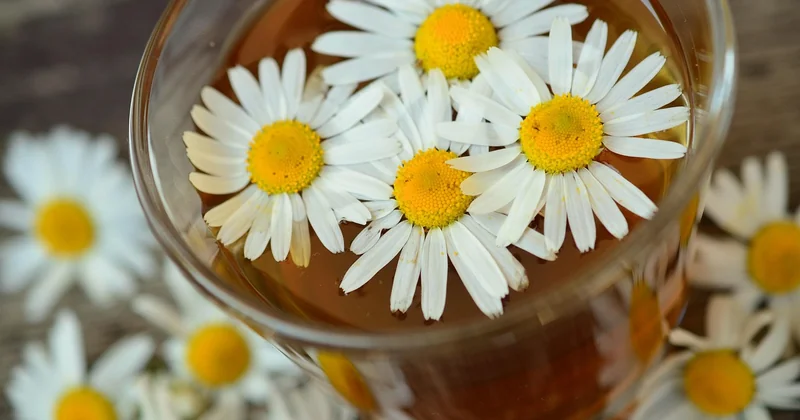
| Chamomile | Apigenin | Sleep onset, mild anxiety | 1–3 cups, evening | Ragweed allergy cross-reaction |
| Ginger | Gingerols, shogaols | Nausea, including motion and post-op | 1–2 g fresh root per cup | Blood thinning at high doses |
| Hibiscus | Anthocyanins, organic acids | Blood pressure support | 2–3 cups daily | Can drop BP too far alongside medication |
| Rooibos | Aspalathin, orientin | Antioxidant intake, caffeine-free daily drink | As much as you like | Very few — the safest of the five |
What are the benefits of each herbal tea?
Peppermint is the one I'd defend hardest. Menthol relaxes the smooth muscle of the gut, which is why it helps with cramping and bloating. The catch: that same muscle-relaxing action applies to the valve at the top of your stomach, so if you get acid reflux, peppermint tea can make it worse. I learned this after recommending it to a friend with heartburn who came back considerably unhappier. If reflux is your problem, ginger is the better pick.
Chamomile has the most human sleep data of any herbal tea, and the effect is modest but real. Apigenin binds to benzodiazepine receptors — gently. It won't knock you out. It will make falling asleep a bit easier if you drink it 30–45 minutes before bed, consistently, for a couple of weeks.
Ginger is the nausea workhorse. It's one of the few herbs where the evidence is strong enough that hospitals have used ginger preparations for post-operative nausea. For everyday use, a few thin slices of fresh root in hot water is more effective than most bagged versions.
Hibiscus is the one with the clearest cardiovascular signal — several trials show a small but consistent reduction in systolic blood pressure with 2–3 cups daily over several weeks. Small means a few points, not a miracle. If you're already on blood pressure medication, that's a reason to be careful, not a reason to celebrate.
Rooibos is what I drink when I want something warm at 9 p.m. and don't want to think about it. Low caffeine, no real interaction risk, pleasant taste. It's not dramatic. It's just reliably fine.
Notice what's missing from this list: lavender, lemon balm, valerian, dandelion. They're not useless, but the human evidence is thinner and the effects are harder to pin down. If you want a short answer to "what is the healthiest tea to drink daily," it's rooibos for safety, peppermint for digestion, and chamomile if sleep is the goal.
What teas should you not mix together?
Mixing herbs isn't automatically bad — most traditional blends are mixtures. The problem is when you stack herbs that push the same system in the same direction, or when one herb blocks the enzyme that clears a drug you're taking.
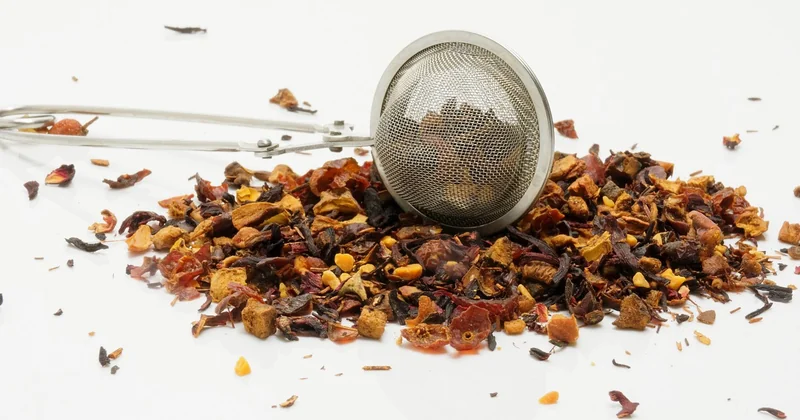
The combinations I'd actually avoid:
- St. John's wort + anything. It induces CYP3A4, the liver enzyme that breaks down a huge range of drugs. Antidepressants, oral contraceptives, immunosuppressants, some HIV medications — the list is long and the consequences are not subtle. This is the one herb I'd tell anyone on prescription medication to simply not drink.
- Licorice + high blood pressure medication. Licorice contains glycyrrhizin, which causes sodium retention and potassium loss. It pushes blood pressure up. If you're also drinking hibiscus to bring it down, you're working against yourself.
- Ginger + blood thinners. Ginger has mild antiplatelet activity. A cup now and then is fine. A daily strong brew alongside warfarin or a DOAC is worth a conversation with your doctor.
- Multiple sedating herbs at once. Chamomile, valerian, lemon balm, and passionflower all act on the calming side. Stacking all four before bed, especially with alcohol, is not a good idea.
- Any herb + grapefruit juice. Not a tea, but the same enzyme logic applies, and people forget it.
Herbal tea side effects
"Natural" and "safe" are not the same word. The most common side effects I see mentioned by people who drink herbal teas daily:
Chamomile can trigger reactions in people allergic to ragweed, daisies, or marigolds — sometimes just a scratchy throat, occasionally something worse. Peppermint worsens reflux in a meaningful minority of people. Licorice, taken daily for more than a couple of weeks, can cause headaches, swelling, and low potassium. Senna, which shows up in "detox" blends, is a laxative and shouldn't be a daily habit at all.
None of this is a reason to stop drinking herbal tea. It's a reason to stop treating it as a background beverage with no consequences.
Buying and brewing: what actually changes the outcome
Two variables matter more than brand: freshness and particle size.
Dried herbs lose volatile compounds over time. A bag that's been in your cupboard for two years will taste dusty and do proportionally less. Loose herb from a shop that turns over stock quickly is usually better than a premium-looking box that's been sitting on a shelf.
Particle size is the other lever. Finely cut herb releases faster but also fades faster in the tin. Whole flowers and roots keep longer and brew slower. For roots, a quick crush with the back of a spoon before steeping makes a noticeable difference.
Quick brewing reference
Leaves and flowers: 200 ml water just off the boil, 1–2 g herb, cover, 5–7 minutes.
Roots and seeds: 200 ml water, 1–2 g, cover, 10–15 minutes.
Fruit (hibiscus, rosehip): 200 ml, 2 g, 8–10 minutes; expect tartness.
One more thing worth saying out loud: don't add honey to a tea you're drinking for a health reason and then wonder why your blood sugar is up. A spoonful is fine, but it's sugar, and it's not neutral.
A quiet conclusion
Herbal tea sits in a strange category — too gentle to feel like medicine, too active to be ignored. The five herbs worth your attention are peppermint, chamomile, ginger, hibiscus, and rooibos, in roughly that order of usefulness for most people. The one to avoid without a doctor's input is St. John's wort, and the one to watch if you have hypertension is licorice.
If you take nothing else from this: pick one herb, drink it consistently for two weeks at a real dose, and see whether anything changes. If it does, keep it. If it doesn't, you've lost nothing but a bit of cupboard space. And if you're on medication and want to make a daily habit of any single plant, ask someone who knows your prescription list. That's a five-minute conversation that's worth having before you commit to a nightly routine.