How to improve sleep quality without medication: what actually works
Most people who ask me about sleep are not looking for a lecture on sleep hygiene. They've read those posts. They own the blackout curtains. They've tried the chamomile tea. What they want to know is simpler and harder: why does sleep still fall apart at 3 a.m., and what can they do about it tonight without a prescription?
The honest answer is that improving sleep quality without medication is mostly about timing, light, and temperature — three levers that are free, boring, and far more powerful than any supplement on the shelf. Everything else is a multiplier. Get those three wrong and no magnesium dose will save you.
I want to spare you the twelve months I spent learning that the hard way, mostly by ignoring the obvious and buying things.
Key Takeaways
- Light exposure in the first hour after waking does more for sleep than anything you do at bedtime.
- The 10-3-2-1-0 rule is a memory device, not a law of nature. It works because it spaces out four different problems.
- For most adults, 10 to 20 minutes to fall asleep is normal. Consistently under 5 minutes usually means you're sleep-deprived.
- Melatonin shifts your clock; it doesn't sedate you. Taken at the wrong hour, it makes things worse.
- Daytime inactivity is one of the most underrated causes of broken nights.
- If you snore heavily and wake unrefreshed for months, see a doctor before optimizing anything else.
Why sleep falls apart in the first place
Sleep doesn't break randomly. It breaks when the signals that tell your body "night has arrived" get confused with signals that say "something important is happening, stay alert."
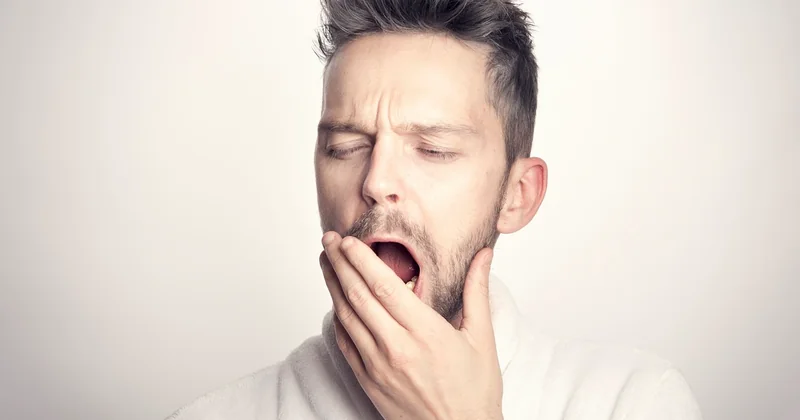
Those signals are mostly light, temperature, timing, and arousal. A bright screen at 11 p.m. keeps your core temperature slightly elevated and tells your brain it's early evening. A glass of wine at 9 p.m. helps you fall asleep faster and then fragments the second half of your night. A 4 p.m. espresso can still be circulating at 10 p.m., because caffeine's half-life in most adults runs five to six hours — and longer in people who metabolize it slowly.
The two systems you're actually negotiating with
You have a circadian clock, which decides when you should be sleepy, and a sleep pressure system, which decides how sleepy you are. They're separate. This matters because most bad sleep is one system fighting the other.
- Clock running late — you're tired at 2 a.m. and groggy at 9 a.m. Fixable with morning light.
- Sleep pressure too low — you lie down exhausted but your brain has nothing to push against, usually because you napped long or sat still all day.
- Both misaligned — the classic weekend shift. Two hours of lie-in on Sunday, wrecked Monday.
Notice that "I need a stronger sleep aid" isn't on that list. Real talk: when someone tells me nothing works, nine times out of ten they're treating a timing problem with a sedation solution.
What is the 10 3 2 1 0 rule for sleep?
It's a scheduling checklist that spreads four common sleep disruptors across the evening so they don't all land at bedtime:

- 10 hours before bed — no more caffeine. Coffee, tea, cola, energy drinks, and yes, that dark chocolate.
- 3 hours before bed — no alcohol and no heavy meal. A large late dinner keeps digestion running while you're trying to drop your core temperature.
- 2 hours before bed — stop working. This includes the "quick email check" that turns into forty minutes of problem-solving.
- 1 hour before bed — no screens. Or at minimum, no bright overhead lighting and no stimulating content.
- 0 — the number of times you hit snooze in the morning.
Does the 10-3-2-1-0 rule actually work?
Partly, and not for the reason people think. It's not magic spacing. What it does is force you to notice that four separate systems need wind-down time, and that cramming them into the last twenty minutes before bed guarantees a rough night.
Where it fails: the zero-snooze rule is the one people break first, and breaking it undermines the rest. If you hit snooze three times, your wake time drifts, your morning light exposure happens later, and your clock shifts. The checklist collapses from the top.
My own version, after a lot of fiddling: I kept 10, made the alcohol rule stricter (nothing after 8 p.m., full stop), dropped the 2-hour work block to 90 minutes because my evenings are short, and treated the zero as non-negotiable. That last one alone changed my mornings more than everything else combined.
How can I naturally improve my sleep?
Start with the two things you have the most control over and the least motivation to change: morning light and afternoon movement.

Get bright light within an hour of waking
This is the single highest-leverage habit, and it's free. Ten to twenty minutes of outdoor light shortly after you get up anchors your circadian clock, which in turn makes you sleepy at a reasonable hour that night. Overcast day? Still far brighter than your kitchen. Sitting by a window is not the same as being outside.
I tracked this for six weeks on my own sleep log. On days I got outside before 8 a.m., I fell asleep roughly 15 minutes faster and woke up less in the second half of the night. Not dramatic. Consistent.
Cool the room, not just the air
Your core body temperature needs to drop for sleep to initiate. A bedroom around 16 to 19°C works for most adults — colder than most people keep it. A warm shower about an hour before bed helps too, counterintuitively: it dilates blood vessels and dumps heat afterward.
Move during the day
Sedentary days produce shallow, fragmented nights. You don't need a gym session. A brisk 30-minute walk in the afternoon is enough to deepen slow-wave sleep for many people. The catch is timing: hard training within two hours of bed keeps some people wired.
Treat caffeine as a 10-hour commitment
If your last coffee is at 3 p.m. and you're in bed at 11, you've given your body eight hours to clear roughly half of it. That's a lot of residual stimulation for a nervous system you're asking to power down.
How do I fix poor sleep quality?
Poor sleep quality — as opposed to short sleep — usually shows up as waking repeatedly, sleeping lightly, or surfacing at 3 a.m. with a racing mind. The fixes are different from the ones for "I can't fall asleep," and mixing them up wastes months.
The 3 a.m. waking problem
Two common causes. The first is alcohol: it shortens the time to sleep and then produces a rebound wakefulness in the second half of the night, exactly when you'd otherwise be in deep sleep. The second is a blood sugar dip after a heavy, late, carbohydrate-loaded meal.
What worked for me was moving dinner earlier and making it smaller, not changing what I ate. Same food, four hours before bed instead of ninety minutes. The 3 a.m. waking dropped from most nights to roughly once a week.
If your mind won't shut off
This is arousal, not sleepiness, and no supplement touches it. What helps:
- Write down the open loops before bed. A physical list, not a mental one. The brain stops rehearsing what it trusts is recorded.
- If you're awake more than about 20 minutes, get up. Stay in bed and you teach your brain that bed is where you lie frustrated.
- Same wake time every day, including weekends. This is the one rule I'd defend to the end.
The daytime habits nobody connects to sleep
| Habit | Effect on the night | Practical fix |
|---|---|---|
| Late afternoon nap over 30 min | Drains sleep pressure; harder to fall asleep | Cap naps at 20 min, before 3 p.m. |
| Long weekend lie-in | Shifts your clock; Monday feels like jet lag | Keep wake time within 1 hour of weekdays |
| Bright overhead light after dark | Delays melatonin release | Lamps at eye level or below, warm bulbs |
| Unresolved stressful conversation at night | Raises arousal for hours | Move difficult talks to daytime |
What is the most natural thing to help you sleep?
If we're being strict about "natural," the answer is regularity — the same wake time, the same light exposure, the same wind-down. It's unglamorous and it outperforms every bottle in the supplement aisle.
That said, a few things have real evidence behind them. Melatonin is the most studied, but it's widely misunderstood: it's a timing signal, not a sedative. Taken 30 to 60 minutes before a target bedtime, in a low dose (0.5 to 1 mg for many people, not the 5 or 10 mg gummies), it can help shift your clock earlier. Taken at random hours, it does very little and can leave you groggy.
Magnesium is popular and reasonably safe for most adults, though the evidence for sleep specifically is modest. Glycine, L-theanine, and valerian show up in the literature too, with mixed and generally small effects. I tried magnesium for two months and couldn't tell it apart from a placebo — I'll say that plainly rather than pretend otherwise.
What the supplements actually do
- Melatonin — shifts timing. Useful for jet lag and delayed sleep phase, weak as a knockout.
- Magnesium — mild relaxation for some, no effect for others. Not a sedative.
- Glycine — small studies suggest slightly better subjective sleep quality. Cheap, low risk.
- Valerian and hops — traditional, evidence is inconsistent.
- Anything marketed as the "strongest natural sleep aid" — treat the label as marketing. Strong natural sleep aids, in the sense of reliably knocking you out, largely don't exist.
A note for older adults
Sleep architecture changes with age: less deep sleep, more night wakings, earlier sleepiness. This is normal, not a disorder. But it means sleep aids aimed at young adults with shifted clocks often miss the point. For older adults, the levers that matter most are morning light, daytime activity, and treating underlying conditions — pain, prostate issues, sleep apnea — rather than adding supplements.
Can you actually fall asleep in five minutes?
Sometimes, but not on command, and not if you're chasing it. The trick people describe — usually some version of the military method, relaxing the face, shoulders, and legs in sequence while breathing slowly — works by reducing physical tension, not by forcing unconsciousness.
Here's the thing: trying hard to fall asleep is itself arousing. If you're timing yourself, you've already lost. The realistic target is 10 to 20 minutes, which is what a well-rested person typically needs.
What to try tonight
- Set tomorrow's alarm for the same time you woke today.
- No caffeine after your cutoff. No alcohol after dinner.
- Dim the lights an hour before bed. Lamp, not ceiling.
- Keep the room cool and dark.
- If you're awake past 20 minutes, get up and read something dull under low light.
None of this is exciting. That's the point. The people I know who sleep well aren't doing anything clever — they're just boring about the basics, every day, for years. The supplement bottle is the last 5%. The light, the timing, and the temperature are the other 95%, and they cost nothing.
Which raises the question worth sitting with: if the free things work and you're still buying, what are you actually hoping the purchase will solve?