On a Tuesday night in March, I stood in my kitchen with a plate, a half-empty fridge, and no plan. I put a chicken breast on it, a pile of rice, and called it dinner. No vegetables. Nothing green. It took me a while, but that plate is exactly why I ended up rebuilding how I think about meals from scratch.
The fix wasn't a new diet or a meal plan app. It was a habit so simple it fits on the back of a napkin: half the plate vegetables, a quarter whole grains, a quarter protein. That's the core of building a balanced plate for everyday meals. Learn that one visual rule and you stop guessing at every dinner.
I'm not a dietitian. I've just spent years cooking for a family of four on a normal budget, with a job and no time, and I've tested this to the point where it's automatic. Below is what actually stuck, what failed, and how to make it work on a rushed weeknight.
Key Takeaways
- The balanced plate formula: ½ vegetables and fruit, ¼ whole grains, ¼ protein, plus a small amount of healthy fat.
- It's a habit, not a diet. You don't count anything. You eyeball proportions on the plate in front of you.
- Everyday meals means the boring Tuesdays, not the impressive Sunday dinners. The plate has to survive real life.
- Kids need smaller portions of the same plate, not a separate menu. Serve the components apart and let them assemble.
- Frozen vegetables and canned beans are not a compromise. They're the reason this works on a week when nothing goes to plan.
What a balanced plate actually looks like on an everyday table
Picture a standard dinner plate, roughly 9 to 10 inches across. Now divide it in your head:
- Half. Vegetables. Raw, roasted, sauteed, from a bag in the freezer. If it's a salad, great—just watch the dressing.
- A quarter. Whole grains or a starchy carbohydrate: brown rice, whole wheat pasta, potatoes with the skin, oats, a slice of real bread.
- A quarter. Protein: fish, chicken, eggs, beans, lentils, tofu, Greek yogurt, cottage cheese.
- A thumb's worth of fat. Olive oil, avocado, nuts, seeds. This isn't a food group on the plate, but it makes the vegetables edible and helps you absorb certain vitamins.
That's it. You don't need to weigh anything. The proportion is the entire system.
Why proportion beats a list of "good" and "bad" foods
For two years I kept a running list in my head of foods I was allowed to eat and foods I wasn't. Bananas: bad, apparently. Bread: bad. Cheese: complicated. That approach made me miserable and I was still not eating enough vegetables, because the list was about restriction, not structure.
The plate flips it. Nothing is forbidden. If you want the pasta, you take the pasta—you just take a quarter of the plate of it and fill the rest with things that grow. The plate doesn't moralize. It just tells you where to stop.
How to build the plate at breakfast, lunch, and dinner
Most advice on balanced plates describes dinner and quietly ignores the other two meals. That's a problem, because breakfast is where I failed hardest for years.
Breakfast: the hardest plate to get right
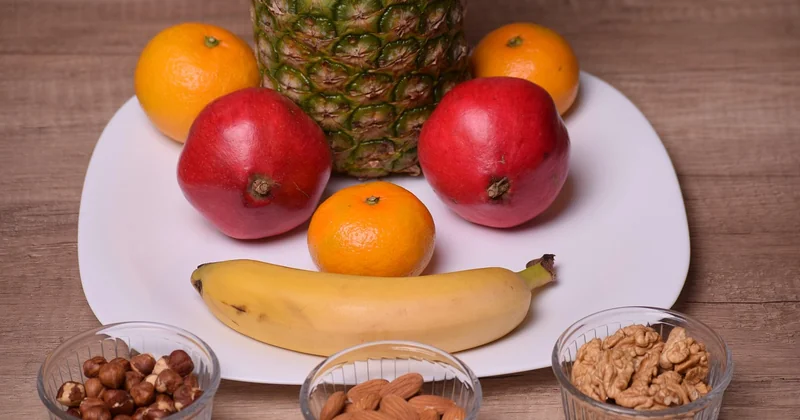
My old breakfast was toast and coffee. That's honestly a breakfast of two carbohydrates and a stimulant, and by 10:30 a.m. I was hunting for something sweet. Here's what fixed it:
- Greek yogurt with berries and a spoon of oats and nuts
- Eggs with a mountain of sauteed spinach and one slice of whole grain toast
- Overnight oats made with milk, chia seeds, and grated apple
Notice none of these are perfectly balanced in the strict plate sense. Breakfast is more of a mini-version: protein, something fibrous, something starchy, all in smaller amounts. A protein-forward start is the single highest-return change I've made to my eating, and it isn't close.
Lunch: the plate you carry in a box
A lunch box doesn't divide visually, so I build it in compartments instead. One large section of vegetables or salad, one small section of grain, one section of protein. When I'm packing it at 7 a.m. and half asleep, I default to a grain bowl: a base of leftover rice or quinoa, a big handful of whatever vegetables are in the fridge, a can of chickpeas or two boiled eggs, and a dressing made of yogurt, lemon, and olive oil.
Total time: four minutes. It costs me maybe two euros in ingredients. That combination has replaced roughly 80% of the lunches I used to buy out.
Dinner: where the formula pays off
Dinner is the easiest place to apply it, and it scales to anything. Sheet pan of roasted vegetables plus sausages plus a baked potato. A curry with a lot of vegetables and lentils, served with a small portion of rice. Pasta with a tomato and vegetable sauce, with white beans stirred in for protein.
The trick is that you're not learning new recipes. You're rearranging the ones you already cook.
The "everyday" part is where most people fail
Anyone can build a beautiful plate on a Sunday. The test is Wednesday at 7 p.m. when you're tired and the fridge is a museum of half-used ingredients.
Buy for the plate, not for recipes
I stopped shopping by recipe. Instead I buy in three categories and figure out meals later:
- Three or four vegetables that keep well—cabbage, carrots, zucchini, onions
- Two proteins I can cook fast—eggs and canned beans cover a shocking number of meals
- One or two grains in bulk
This cut my food spending noticeably, because I stopped buying ingredients for one specific dish and then throwing out the leftovers. Roughly a third of what I used to buy went in the bin. That's not a diet problem. That's a planning problem dressed up as one.
Ten minutes of prep, not a Sunday marathon
Full meal prep never worked for me. By Thursday, everything tasted like Tuesday. What works instead is component prep: cook a pot of grains, roast a tray of vegetables, boil some eggs. Fifteen minutes on a Sunday evening buys you three dinners, and crucially, it lets you assemble different plates each night so you don't get bored.
The plate for kids (and how not to lose the argument)
Children will not accept a loaded plate. Put rice, chicken, and broccoli all touching each other and you've declared war.

What worked in my house was deconstructing the plate: same components, served separately, and the child assembles their own. A small portion of each, no negotiation, no pressure to finish. It took about six weeks of serving vegetables they ignored before they started eating them, and I'll be honest, the first three weeks felt like throwing food in the bin. Which, technically, it was.
One rule I'd defend hard: don't cook a separate meal. The plate is the plate. The child controls how much, not what.
A quick comparison: what changes when you rebuild the plate
| Element | The plate I used to build | The plate I build now |
|---|---|---|
| Vegetables | A side thought, often absent | Half the plate, always present |
| Grain portion | Covering the whole plate | One quarter, whole grain where possible |
| Protein | The star of the meal | One quarter, varied across the week |
| Planning | Recipe by recipe, lots of waste | By component, low waste |
| Effort per meal | High on good days, nothing on bad days | Low and consistent |
Questions that come up constantly
These are the ones I get asked most, and they're worth answering directly.
What are healthy foods to eat every day?
There's no fixed list, and anyone who gives you one is oversimplifying. What matters is that most days include vegetables in quantity, some fruit, whole grains rather than refined ones, a protein source, and a small amount of healthy fat. Water, tea, or coffee without sugar as the default drink. If you want a practical shortcut, aim to eat several different colors of vegetables across a week, not every single day.
How much protein should be on the plate?
About a quarter of it, which for most adults lands somewhere around the size of a palm. The bigger question is variety. Fish, poultry, eggs, beans, lentils, tofu, and unsweetened dairy all count. Red meat and cheese can appear, just less often. Processed meats like bacon and deli slices are the ones I'd genuinely keep rare.
Does this work for vegetarians and vegans?
Yes, and it's arguably easier. Beans, lentils, chickpeas, tofu, and tempeh slot straight into the protein quarter. The only thing to watch is getting enough iron and B12, which is a conversation to have with a doctor rather than a blogger. I cooked fully vegetarian for about eight months and the plate structure didn't change at all.
Where do drinks fit in?
They don't go on the plate, and that's exactly why they get ignored. Sugary drinks are the easiest place to cut hundreds of calories without noticing. Water, sparkling water, tea, black coffee. If you drink a lot of soda, swap one a day and see what happens over a month.
The part nobody tells you
I tracked this loosely for about four months. Not calories, just a tick on a calendar for whether half my dinner plate had been vegetables. Month one: about 40% of days. Month four: somewhere near 75%. No dramatic before-and-after photo, no weight loss chart worth showing. Just a slow drift toward better food, and the days I missed didn't undo anything.
That's the real argument for the plate over any diet. A diet is a project with an end date, and when it ends you go back. A plate is just how you eat now. It survives a bad week, a takeout night, a birthday cake, because it was never a rule you could break.
Start with one meal. Tomorrow's dinner, most likely. Half the plate, vegetables. See how long it takes before it stops feeling like a rule and starts feeling like dinner.