Your blood pressure can be quietly, steadily wrecking your arteries for a decade without producing a single symptom you'd notice. No headache. No dizziness. Nothing. Then one morning you're in an emergency room being told your kidneys are damaged. I've watched this happen to two people close to me, and both of them had skipped checkups for years because they "felt fine."
That's the strange gap at the heart of this whole conversation. We tend to treat health like a car alarm: we only react when something starts flashing. But the conditions that actually kill most people in wealthy countries — high blood pressure, type 2 diabetes, chronic kidney disease, several cancers — don't announce themselves. They accumulate silently. Which is exactly why regular checkups matter for long-term health: not because they magically prevent everything, but because they move you from reacting to problems to catching them while they're still small.
Now, I want to be honest with you here, because the standard article on this topic tends to oversell the case. The evidence on general checkups is messier than most people admit, and if I pretend otherwise, you'll stop trusting me the moment you read something else. So let's do this properly — what the checkups genuinely do, what they don't, and how to make yours actually worth the morning off work.
Key Takeaways
- Checkups catch conditions like hypertension and diabetes years before symptoms appear — that window is the whole point.
- A general "annual physical" alone has weaker evidence behind it than most people assume; targeted screening and risk assessment are where the value lives.
- Your age, family history, and lifestyle determine which tests make sense — a generic panel wastes money and creates false reassurance.
- Consistency beats intensity: a checkup every few years that actually happens is worth more than an ambitious plan you keep postponing.
- Vaccination, blood pressure monitoring, and behavioral counseling are among the most reliably useful elements of any visit.
Why regular checkups matter more than most people think
Here's the thing about the human body: it's a remarkable liar. Your liver can lose a large share of its function and still keep your blood tests looking almost normal. Your kidneys compensate until they really can't. Your pancreas quietly struggles with blood sugar for years before a diagnosis lands.
By the time you feel something, the disease has usually been present for a long while. That's not a scare tactic — it's just how chronic conditions behave.
The silent window is where checkups earn their keep
Think of a checkup as a snapshot taken at intervals. One photo tells you almost nothing. Twenty photos over twenty years tell you a story: your cholesterol creeping up, your fasting glucose drifting, your blood pressure inching from 120/80 toward 135/85. None of those individual numbers would panic anyone. The trajectory is what matters, and you can only see a trajectory if you keep showing up.
This is the part people underestimate. It's rarely a single dramatic result that changes someone's life. It's the pattern.
A friend of mine — mid-forties, cycled to work, ate reasonably well — went in for a routine visit after his wife nagged him for two years. His blood pressure was 148/94. He felt nothing. No symptoms at all. His doctor put him on a low-dose medication and, more importantly, he cut his salt intake and started sleeping properly. Five years later his numbers are normal and his heart hasn't taken the hit it was heading toward. That's not a miracle. That's just early detection doing its ordinary job.
What a checkup actually buys you
Let's strip away the marketing and name the concrete things a well-designed checkup gives you:
- Baseline measurements — blood pressure, weight, waist circumference, blood lipids, blood sugar. These become your reference points.
- Risk assessment tailored to your family history and habits, which is where the real preventive advice comes from.
- An opportunity to update vaccinations — one of the most cost-effective preventive measures that exists.
- A chance to raise the thing that's been bothering you for months but never felt serious enough for a dedicated appointment.
- Mental health screening, which many people never get anywhere else.
Notice what's not on that list: the vague promise that you'll live longer simply because you walked through the door. That claim needs more nuance, and we'll get to it.
The uncomfortable truth about the evidence
I spent a good chunk of one winter reading through the research on general health checkups, expecting to find a clean, reassuring story. I didn't. I found an argument.

On one side: systematic reviews of general "annual physical" programs — where healthy adults with no complaints get a broad battery of tests — have repeatedly found little or no reduction in overall mortality. That's a genuinely surprising result, and it's the one nobody puts in the brochure. A large review of these programs concluded they didn't clearly extend lives.
On the other side: targeted screening works, and works well. Blood pressure control reduces strokes and heart attacks. Cervical and colorectal cancer screening save lives. Vaccination saves lives. Smoking-cessation counseling saves lives. Diabetes detection changes outcomes when it happens early.
So which is it? Both, and the resolution matters enormously for how you use your next appointment.
Why this paradox exists
General checkups without a specific focus tend to catch a lot of things that would never have harmed you, and miss the specific things worth catching. They generate false positives, which cascade into more tests, more anxiety, occasionally more procedures you didn't need. A slightly abnormal result on a broad panel can send you down a rabbit hole for nothing.
The lesson isn't "skip the checkup." It's "stop treating a checkup as a generic ritual and start treating it as a targeted risk assessment."
Here's what that looks like in practice:
| Approach | What it catches well | Main weakness |
|---|---|---|
| Generic annual physical | Broad but shallow; mostly reassuring | Weak evidence for mortality benefit; false positives |
| Age- and risk-based screening | Colorectal cancer, cervical cancer, hypertension, diabetes | Requires knowing your own risk profile |
| Blood pressure monitoring alone | The single most common silent killer | Easy, cheap, and still skipped by millions |
| Vaccination checks | Preventable infectious disease | Only if you actually ask |
If you take one thing from this section: the value is not in the volume of tests. It's in the targeting.
What a regular health check-up should actually include
There's no universal list, and anyone who hands you one is oversimplifying. But there is a sensible structure, and it shifts with your age and your personal risk factors.
The core elements
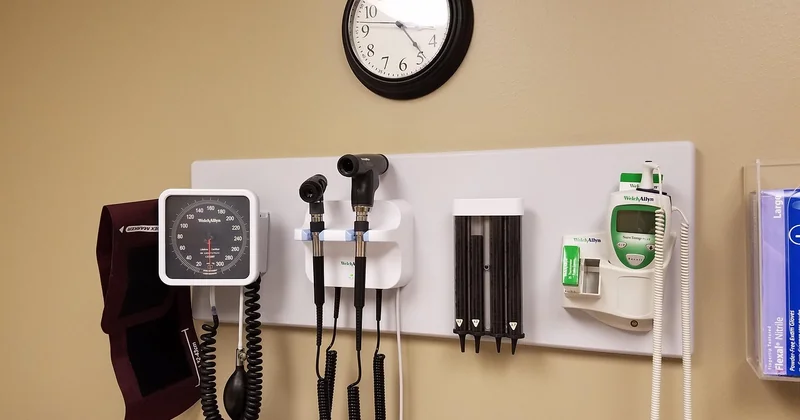
- Blood pressure — measured properly, on both arms, ideally more than once. This is non-negotiable at any age.
- Blood work: fasting glucose or HbA1c, and a lipid panel (total, LDL, HDL, triglycerides).
- Weight, waist circumference, and a conversation about how your weight has changed over time.
- Vaccination status review.
- Age-appropriate cancer screening: colorectal screening typically from around age 45–50 in most national guidelines, cervical screening for women from early adulthood, mammography discussions starting around 40–50 depending on family history.
- Mental health and sleep, which are increasingly recognized as central, not peripheral.
- A skin and oral check, especially if you've had significant sun exposure or you've noticed something new.
Two things I want to flag. First, colonoscopies and Pap tests are not interchangeable with a blood draw — different screening tools catch different cancers, and no single blood test replaces them. Second, if you've been told your whole life that you're "low risk" because your family has no history, ask yourself whether anyone in that family ever actually got screened. Absence of a diagnosis and absence of disease are not the same thing.
How often should you actually go?
The honest answer: it depends, and the frequency should be negotiated with a clinician who knows your history. For most healthy adults with normal numbers, every two to five years in early adulthood is a reasonable cadence, moving to annual or biennial monitoring once you cross into middle age or once anything trends the wrong way.
What matters more than the interval is the continuity. A checkup with a doctor who has your previous results in front of them is worth three checkups with strangers.
Why so many people skip checkups — and what it costs
I was one of them for a stretch. Right after a job change, I told myself I'd go "once things settled down." They never settled. It took a family scare to get me back through the door, and I'm not proud of the gap.

The reasons people skip are predictable, and so are the consequences.
- "I feel fine." — The most common reason, and the least logical one, since the whole point is catching things before symptoms.
- Cost and insurance friction, which is a real barrier and not a character flaw.
- Anxiety about what might be found. This one I understand deeply.
- The scheduling tax — taking time off, finding parking, the whole administrative slog.
Real talk: the anxiety doesn't disappear by avoiding the appointment. It just compounds with interest. The thing you're worried about, if it's there, will still be there next year — except larger and harder to treat.
The compounding argument
Here's why I've changed my behavior. A small problem caught early is almost always cheaper, easier, and less disruptive than the same problem caught late. A cholesterol conversation at 45 beats a cardiac event at 60. A polyp removed during screening beats colon cancer. This isn't about living forever — it's about protecting the years you'll actually enjoy.
Making your next checkup actually count
Given everything above, the way you prepare for a checkup matters almost as much as showing up.
Before the visit
- Write down your family history as specifically as you can — who, what condition, at what age.
- List any symptoms you've dismissed, however minor. Bring the list. You will forget half of them in the room.
- Note your medications and supplements, including the ones you think don't count.
- Ask yourself honestly about alcohol, smoking, and sleep — and be ready to say the real numbers.
During the visit
Ask three questions and don't leave without answers: What are my numbers compared to last time? What's my biggest risk right now? What should I do differently before we meet again?
That last one is where the actual long-term benefit lives. Advice you act on — a dietary change, a medication started on time, a follow-up scheduled — is what moves your trajectory. The test result is just information. The behavior is the medicine.
The takeaway that stays with you
Regular checkups aren't a magic ritual, and anyone who tells you they'll add years to your life by their mere existence is selling you something. The evidence doesn't support that claim, and I'd rather you knew it.
What they do is give you a window into the parts of your body that stay silent until it's late. They give you a baseline, a trajectory, and a chance to change course while changing course is still cheap. That's a modest promise — and a genuinely powerful one.
The question isn't whether checkups are the perfect preventive tool. It's whether you'd rather find out about a problem at 47, when it's a conversation, or at 62, when it's an emergency. The next appointment you book is a bet on the first answer. And honestly, it's one of the better bets you'll ever make.